
Annual reports as a video booklet
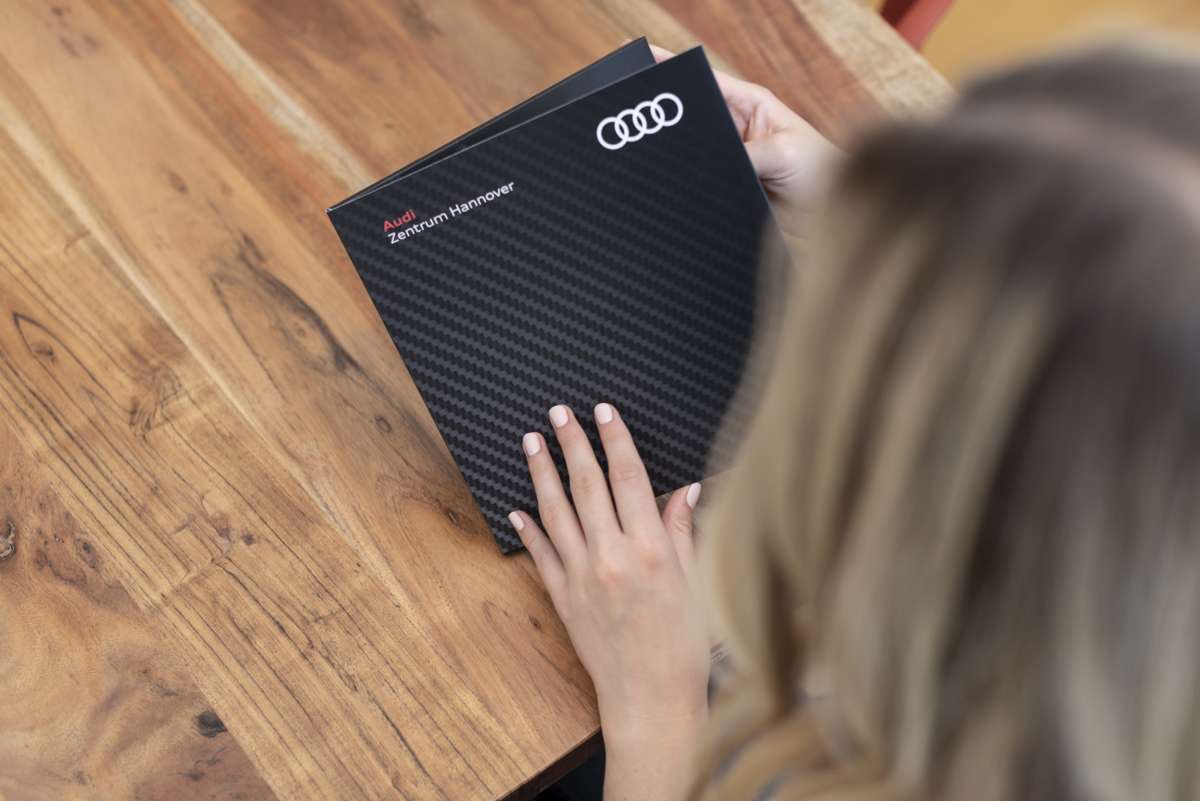
For many companies the annual report is the flagship document of the year. It sets out how the business performed, where it stands and which direction it is heading in. It is also the document that is least often read from cover to cover. A video booklet turns that around: it makes the obligatory report into one that recipients open, watch and pass on.
Why an annual report is more than a statutory duty
An annual report does two jobs at once. Internally it creates clarity about figures, targets and responsibilities. Externally it is a marketing instrument: banks, investors, business partners, candidates and employees all read it as a statement of how a company thinks about itself.
A modern annual report therefore contains more than dry figures. What matters is how the content is presented – and that is exactly where print and PDF run into their limits.
Where print and PDF run out of road
A printed brochure looks substantial but stays static: developments over several years, processes or a personal word from the management can only be described, not shown. A PDF, meanwhile, lands in the inbox among dozens of other attachments. It is downloaded, skimmed and rarely opened again.
Content with animation, video, audio or images, by contrast, is viewed far more often; time spent and attention both rise noticeably. Data and facts are easier to remember, and the need to act becomes clearer – the content feels more alive, more comprehensible and more tangible.
The annual report as a video booklet
A video booklet combines the two. It is a printed booklet with the look and feel of a high-quality annual report, and it carries a colour screen, a loudspeaker and a rechargeable battery inside it. Open it and the film starts – no app, no internet, no extra device.
That gives the report a second layer. On paper you have the balance sheet, the key figures and the management report. On film, the people behind them speak: the management on the year just ended, the project lead on the new production line, employees on what has changed in their working day.
Which content is worth putting on film
- The management's foreword – spoken rather than printed. Nothing creates closeness as quickly as a face and a voice.
- Developments over several years – animated curves show in twenty seconds what a table needs half a page for.
- Investments and sites – a new hall, a new plant, a new market: shown, it feels far more tangible than described.
- Sustainability and social commitment – measures that stay abstract in text become verifiable on screen.
- The people in the company – particularly valuable if the report is also meant to reach candidates.
As a rule of thumb: the film does not replace the report, it leads into it. Three to five minutes is almost always enough for that.
Who should receive the video booklet
For an annual general meeting, a video booklet is too elaborate to hand out widely. Its strength lies in deliberate, targeted handover: to investors and shareholders, to your principal bank, to your most important customers and suppliers, to the supervisory and advisory boards, to local politicians or the press – and to employees, who take it home with them.
Many companies therefore run two tracks: the conventional report as a PDF for everyone, and the video booklet for the fifty to three hundred recipients where the impression counts.
Format, technology and finishing
- Format: for annual reports, A5 with a 5 inch screen and A4 with a 7 inch screen work well. Anything from 2 to 10 inch is possible.
- Picture quality: a crisp, sharp picture thanks to full HD resolution.
- Storage: 256 MB to 16 GB; one gigabyte holds up to 20 minutes of HD video. Several chapters can be selected using buttons or a touchscreen.
- Battery: lasts several weeks and charges over the same USB port used to load the film.
- Finishing: matt or gloss lamination, hot foil stamping in silver, gold or copper, special colours and, if you want one, a printed slipcase.
- Write protection: stops the film being replaced by accident – an important detail where the figures are confidential.
Schedule and costs
Plan the video booklet as early as you plan the printing of the report itself. The film needs lead time: shooting days with the management, sign-off from communications and legal, the final approval of the figures. In practice it works best to start the edit only once the figures have been audited.
The minimum order is 100 pieces, because every card is made individually. The unit price runs from 20 to 50 euros depending on quantity, screen size and storage, plus one-off set-up costs.
Frequently asked questions
Does the video booklet replace the printed annual report?
No. It complements it. Figures, the balance sheet and the management report still belong in the report itself; the film introduces the main topics and gives the management a face. Many companies distribute the PDF widely and the video booklet selectively.
How long should the film in an annual report be?
Three to five minutes, ideally split into chapters that the recipient selects using buttons or a touchscreen. Longer films are no technical problem: 1 GB holds up to 20 minutes of HD video.
Is confidential content safe on a video card?
The card works like a USB device, so the film sits on it unencrypted. For confidential content we recommend write protection and a controlled handover rather than open distribution by post.
How many copies do I have to order as a minimum?
The minimum order is 100 pieces. The unit price is between 20 and 50 euros depending on quantity, screen size and storage, plus one-off set-up costs.
How long does production take?
That depends on quantity, finishing and the film. Tell us your target date in your enquiry and we will tell you bindingly what is achievable by then, planning the approvals backwards from the dispatch day.
Video booklets for your next project
Tell us the quantity and the screen size and you will receive an individual quotation.