
The screencard: video cards at the point of sale
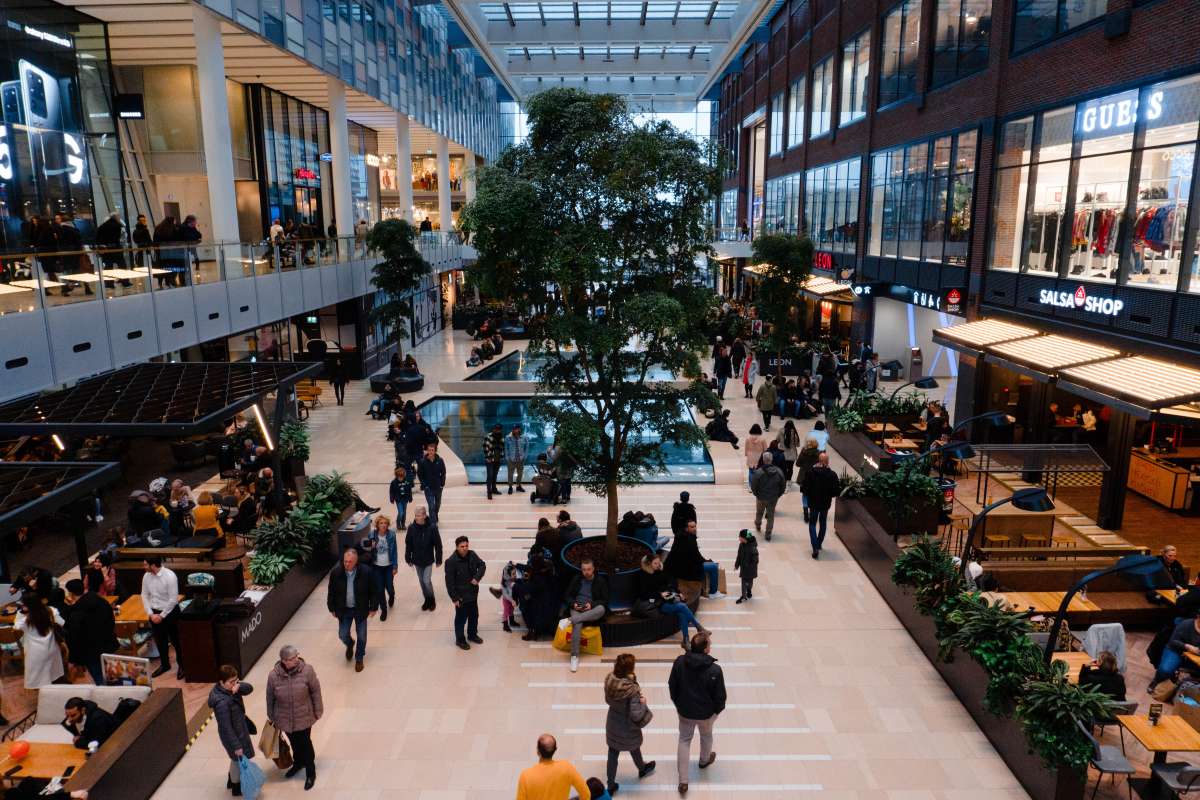
What ends up in the trolley is decided in the shop. After all the advertising that came before, the customer is suddenly alone at the shelf – between your product and the competitor's. This is exactly where moving pictures at the point of sale come in. A video card on the shelf explains, demonstrates and persuades in the place where the buying decision is actually made.
Why moving pictures work at the point of sale
Event shopping means shopping with all the senses. The experience in store is the strongest answer bricks-and-mortar retail has to online shopping, and moving pictures are the means of giving the shelf a voice. A rule of thumb in retail marketing is that around 70 per cent of buying decisions are only made at the point of sale, which is to say exactly where consumer and product meet.
A screen that is running catches the eye before the customer reads anything at all. In seconds it explains what packaging would have to describe in body copy: how a device is operated, where a food product comes from, how a fabric feels. The result is trust – and trust sells.
The screencard: a video card with an exchangeable cover
Large monitors are often too bulky, too expensive and too awkward to mount at the shelf. The screencard is the compact alternative: a flat card with a built-in colour screen, loudspeaker and rechargeable battery that can be stood up, hooked on or propped against something.
Its decisive advantage in retail is the individually printed cover, which can be swapped. The technology stays, the campaign changes: a different motif for the summer promotion than for the Christmas trade, a separate one for every brand on the shelf. That turns a one-off advertising item into a carrier you can keep using for years.
Where it is used in retail
Shelf and secondary display
Placed right next to the product, the video card takes on the role of the salesperson who happens not to be there. It pays off above all with items that need explaining: what cannot be covered in one sentence on the packaging, the film shows in thirty seconds.
Checkout zone and service counter
Counters create waiting time, and waiting time is attention. A video card presenting add-on services, warranty packages or the loyalty programme reaches people who are standing and looking anyway.
Window display and entrance
The window display decides who comes in. A moving picture holds the eye longer than a poster – and it carries on working when the shop is closed.
A4 display stands
As a special version there is a small A4 display stand that the video card slots into. It stands freely on a table or a pallet, can be redressed and takes up almost no space.
Orientation and wayfinding
Video screens do not always have to sell. They do a good job of guiding customers through a large floor area, explaining departments or pointing out services such as click & collect.
Training at the shelf
Your own staff benefit too. A video card in the stockroom or behind the counter gets new products into people's heads faster than any manual.
Technology for continuous use
At the point of sale an advertising item does not run once, it runs for weeks. The video card can be specified accordingly:
- Power supply: an external power supply unit for continuous operation, or a particularly strong battery where there is no socket nearby.
- Trigger: start at the push of a button, or automatically via a motion sensor as soon as someone steps up to the shelf.
- Sound: a built-in loudspeaker, amplified further on request. For noise-sensitive environments there is a headphone jack.
- Screen: 2 to 10 inch, in full HD resolution. At the shelf, 5 and 7 inch have proved their worth.
- Content: loaded over USB and replaceable at any time; with write protection on request, so that nobody in the shop can swap the film.
- Compliance: every card is CE, RoHS and WEEE compliant and may therefore be placed on the market in the EU.
Content that works at the shelf
A film at the point of sale follows different rules from an image film on your website. Three things decide it:
- Short: 15 to 45 seconds. Nobody stands in the aisle for longer than that.
- Understandable without sound: hardly anyone is listening on the shop floor. Work with big pictures and short captions rather than spoken text.
- With a clear ask: the end should say what the customer is meant to do – pick it up, try it, speak to a member of staff.
What does a video card for retail cost?
Every card is an individual production, which is why the minimum order is 100 pieces. The unit price runs from 20 to 50 euros depending on quantity, screen size and storage, plus one-off set-up costs.
For a chain of stores it adds up quickly. One card per location does not replace a monitor installation, but it earns the same attention at a fraction of the cost – and for the next campaign you simply carry on using it with a new cover and a new film.
Five steps to a video card at the point of sale
- Decide on the placement. Shelf, counter, window or display stand – size and power supply follow from that.
- Choose the trigger. Continuous play, push button or motion sensor.
- Produce the film. Short, understandable without sound, with a clear ask.
- Design the cover. One motif per campaign, so that the card can be reused afterwards.
- Check a sample, then roll out. We supply samples in 4.3, 5 and 7 inch.
The screencard is also a solution for trade fairs and events, where it is usually built as a folder with a printed section alongside the film.
Frequently asked questions
What is a screencard?
A screencard is a flat card with a built-in colour screen, loudspeaker and rechargeable battery. For retail it comes with an exchangeable, individually printed cover: the technology stays, while the motif and the film change with the campaign.
Can the video card run continuously at the shelf?
Yes. For continuous use we fit the card with an external power supply. Where no socket is available we build in a particularly strong battery; playback can also be triggered by a motion sensor or a button, which extends the running time considerably.
How long should a film at the point of sale be?
15 to 45 seconds. It should be understandable without sound, because hardly anyone is listening on the shop floor. Longer films are no technical problem: 1 GB holds up to 20 minutes of HD video.
Can the film or the motif be changed later?
Both can. You load the film yourself over the USB port, and you swap the printed cover for a new one. That way the same card serves several campaigns.
Will the sound disturb other customers in the shop?
The sound can be switched off or turned down. For sensitive environments there is a headphone jack; alternatively, work with captions instead of spoken text.
What is the minimum order for video cards?
The minimum order is 100 pieces, because every card is made and printed to order. The unit price is between 20 and 50 euros depending on specification, plus one-off set-up costs.
Video booklets for your next project
Tell us the quantity and the screen size and you will receive an individual quotation.