
Seeing, hearing, touching: how a video booklet works
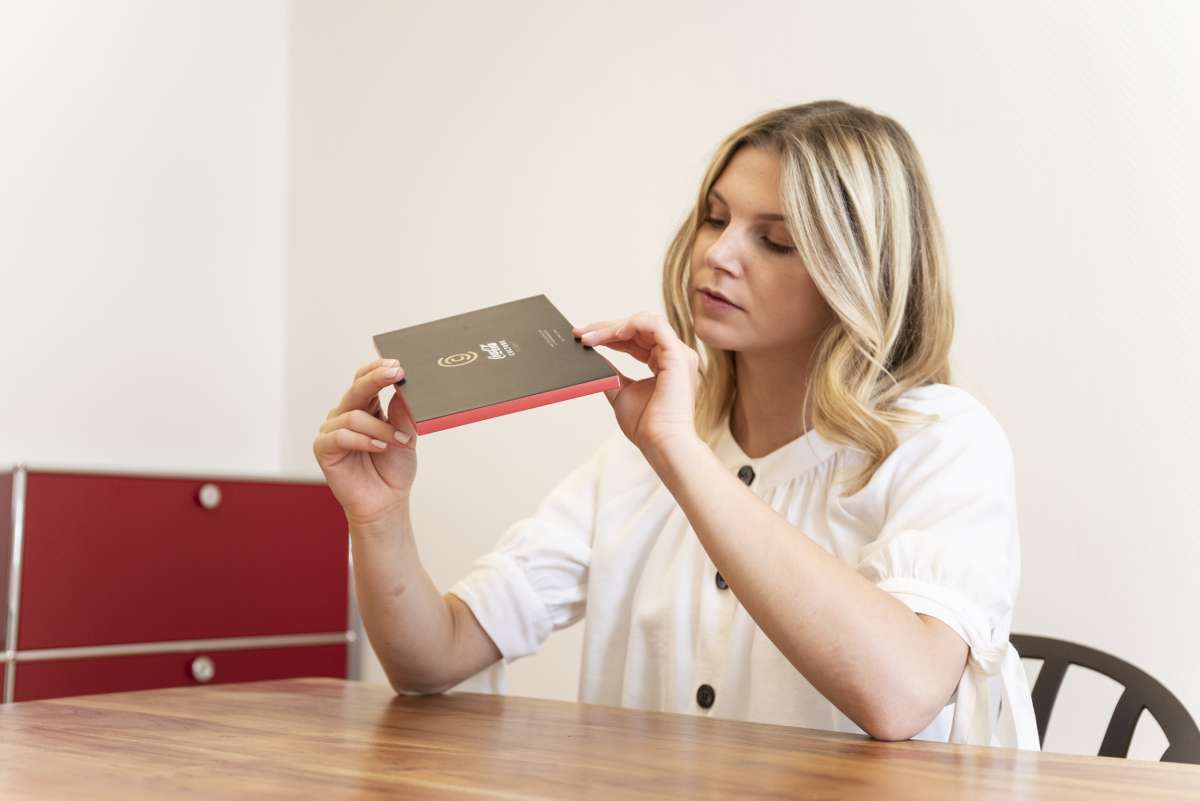
Advertising that is only seen is quickly forgotten. Advertising that is seen, heard and held stays. That is exactly what the video booklet is built on: it combines a conventional printed item with a video display and so speaks to three senses at once. Here is what that means in practice – and why the order matters.
Why three senses do more than one
The more senses are involved in an impression, the more reliably it stays in the memory. A brochure speaks to the eye. A radio spot to the ear. A promotional gift to the hand. The video booklet is one of the few advertising media that serves all three at the same time, in a single connected moment.
That moment does not begin with the film but with reaching for the card. The picture comes next, then the sound. Anyone planning a video booklet should therefore design all three levels, not just the video.
Seeing: the video inside a printed item
Inside the card sits a colour screen that starts by itself when the card is opened. Thanks to full HD resolution the picture is crisp and sharp, even on small displays.
Screen size follows the format and the occasion: anything from 2 to 10 inch is possible, and the most popular is 5 inch, which suits A5 well. 4.3 inch is more compact, 7 inch suits A4. Several films can be selected using buttons or a touchscreen – an image film and three product videos on the same card, for instance.
Hearing: sound that does not come from a phone
A built-in loudspeaker makes sure the film is not silent. That sounds obvious, but it is the point at which QR codes fail: there the recipient first has to reach for their phone, scan the code and hunt for the volume. With a video booklet the sound runs as soon as the card is open.
For environments where sound is a nuisance – exhibition halls, shop floors, open-plan offices – there is a headphone jack and, on request, an additional loudspeaker for a fuller sound.
Touching: feel, weight, finishing
The third sense is often underrated, yet it decides whether the card gets opened at all. A video booklet sits more heavily in the hand than a leaflet, and that weight signals quality before a single word has been read.
You shape that through the finishing: matt or gloss lamination, hot foil stamping in silver, gold or copper, special colours or a printed slipcase. All outer and inner surfaces can be printed individually, edge to edge, and almost any format can be produced.
Where the combination works best
- As a mailing: your product film arrives on the desk by post instead of disappearing into an inbox.
- At trade fairs: the conversation on the stand carries on in the visitor's bag.
- As an invitation: an invitation that shows the venue and speaks to the guest in person does not land on the pile.
- As an explainer: products that need explaining are demonstrated rather than described – in a sales meeting as much as in training.
- As an advertising medium generally: wherever you want to stand out from competitors who all use the same paper.
What to bear in mind when planning
- Format first, then the screen. The two should be in proportion, otherwise the card looks unbalanced.
- Keep the film short. Two to three minutes is almost always enough; 1 GB holds up to 20 minutes of HD video, and 256 MB is usually sufficient.
- Take the outside seriously. The outside decides whether the card is opened; the inside decides whether anyone listens.
- Plan for the sound. Where the recipient opens the card determines whether a loudspeaker or headphones make sense.
- Order a sample. The feel of a card cannot be read off a quotation – only off the card in your hand.
Technology and costs at a glance
- Screen: 2 to 10 inch, full HD resolution.
- Storage: 256 MB to 16 GB, loaded over USB and replaceable at any time.
- Battery: lasts several weeks, charged over the same USB port.
- Controls: touchscreen or buttons for play, pause, volume and chapters.
- Compliance: CE, RoHS and WEEE compliant.
- Quantity and price: from 100 pieces, 20 to 50 euros per piece depending on specification, plus one-off set-up costs.
Frequently asked questions
Which three senses does a video booklet speak to?
Sight through the video on the built-in screen, hearing through the integrated loudspeaker, and touch through the card itself – its format, weight and finishing. Because all three come together, the message stays in the memory better than with a purely printed item.
Does the video start automatically?
Yes. Playback begins as soon as the card is opened. The recipient controls pause, volume and chapter selection using buttons or a touchscreen.
Does the recipient need a smartphone or internet?
No. The screen, loudspeaker and battery are built in and the film sits on the card. There is nothing to scan, nothing to install and no connection that can fail.
Which formats and sizes are possible?
Almost all of them. From business card size to a multimedia book, with screens from 2 to 10 inch. Every surface can be printed individually, edge to edge.
What does a video booklet cost?
Between 20 and 50 euros per piece depending on quantity, screen size and storage, plus one-off set-up costs. The minimum order is 100 pieces, because every card is made individually.
Video booklets for your next project
Tell us the quantity and the screen size and you will receive an individual quotation.